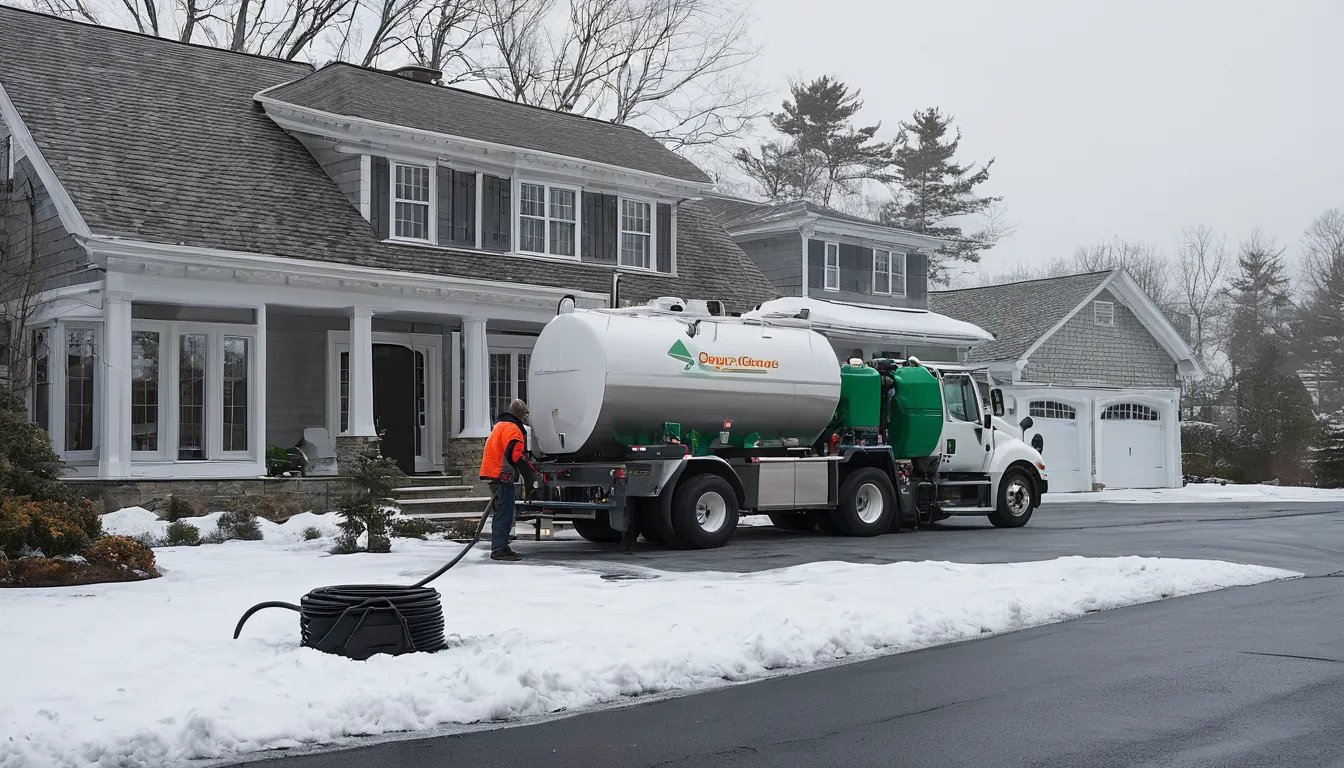
Septic Tank Pumping for Glassboro Homeowners
Request an estimate and compare
A septic tank is a quiet worker. It sits underground and holds the wastewater from your home while solids settle to the bottom. Over time, those solids pile up, and the tank needs to be emptied. That job is called septic tank pumping, and it is the most common way to keep a system healthy.
Termsusa Septic is a referral service. We do not pump tanks. We explain what is going on, then connect your request with independent providers in the Glassboro area. You can review their estimates side by side and decide at your own pace, with no obligation. Think of it as comparing, then deciding, instead of picking the first name you find during a stressful moment.
Tank Full or Overdue? Start Here
A septic tank works like a settling jar. Heavy solids sink, grease floats, and the clearer water in the middle flows out to the drainfield. When the jar fills with solids, the extra has nowhere to go but onward, and that is when trouble shows up.
If sewage is backing up into a basement floor drain, tub, or toilet, treat it as urgent. Stop using water and keep children and pets away from the wet area. Then ask a provider about emergency septic cleaning.
Signs the Tank May Be Full
Most tanks give hints before they fail. Watch for these:
- Drains that run slowly in more than one room
- Gurgling sounds in the pipes after a flush
- A sewage smell near the tank, the yard, or the basement
- Grass over the tank that is soggy, or unusually green and lush
- Water pooling above the drainfield, even in dry weather
One sign alone may be a simple clog. Two or three together point toward the tank.
What You Can Safely Do While You Wait
There is a useful split between helping and handling. A homeowner can cut back on water. Skip laundry, take short showers, and hold off on the dishwasher. This is like turning down a faucet when the sink is nearly full.
You can also find the tank lid area and clear snow, toys, or planters from the spot so a provider can reach it.
Do not open the lid yourself. Tank gases can be dangerous, and a missing or broken lid is a fall risk. Pumping needs a truck, a long hose, and trained hands. That part belongs to a professional.
Why Regular Pumping Matters
Think of a kitchen strainer that never gets cleaned. At first the water still passes through. Then it slows, then it stops. A tank behaves the same way. Pumping removes the sludge before it reaches the drainfield pipes and soil.
This matters because a clogged drainfield is much harder to fix than a full tank. Drainfield repair can cost many times more than a routine pump-out. Regular pumping is the small bill that helps you avoid the large one.
How Often Should You Pump?
A common rule is every three to five years. Your own number depends on tank size, how many people live in the house, and how much water you use. A garbage disposal adds more solids, so it can shorten the gap.
Picture a water bottle shared by a big family. It empties faster than one used by a single person. Multi-family homes and busy households often need pumping more often than a quiet two-person home.
Cold Weather, Snowmelt, and Storms
Winter changes how a septic system behaves. Frozen ground and heavy snow can hide lids and make access hard. Freeze-thaw cycles can shift soil and stress pipes.
In spring, snowmelt can soak the ground around the drainfield. A soaked sponge cannot take in more water, and a soaked drainfield works the same way. If the tank is already full, spring is when problems often show. Coastal storms can add to this by raising the water table.
Booking pumping before the cold months, or before spring, can make life easier.
What Happens During a Pumping Visit
The provider finds the tank and uncovers the lid or lids. A hose is lowered in, and the liquid and sludge are pumped into the truck. Many providers also break up the crust and scum layers first so the tank empties well.
Then they look at the inside. They may check the baffles, the inlet and outlet pipes, and the water level. A good visit ends with the lid closed securely and a note on anything that looks worn.
Pumping and Inspections
Pumping and inspecting often go together, like changing a filter and peeking at the furnace while the panel is off. Since the tank is empty, it is a good time to spot cracks, root intrusion, or a failing baffle.
Ask if the visit includes a basic look, or if a fuller inspection is a separate item on the estimate. Providers can often help document what they find.
Buying or Selling a Home With a Septic System
Many buyers and lenders ask for a pump-out and inspection before a sale closes. Older houses with full basements, stone or block foundations, or additions may have older tanks, so records matter.
Sellers can gather past pumping receipts. Buyers can ask for the tank location and age. A provider can help you understand what an inspection report means in plain terms.
Homes With a Private Well
If your home has a private well, the septic tank and drainfield sit at a safe distance from it for a reason. A leaking or overfull system can put wastewater too close to drinking water.
Tell the provider where your well is. If you ever worry about your water after a septic problem, ask about water well service and testing from a local provider.
Caring for Your System Between Pumpings
Small habits help. Spread laundry across the week instead of doing it all in one day. Keep grease, wipes, and paint out of the drains. Use septic-safe cleaners in moderation.
Keep cars and heavy equipment off the drainfield, and plant only grass over it. Tree roots seek out water and can invade pipes. Keep a simple log of each service visit and the date.
How to Compare Estimates
Two estimates can look different for good reasons. One may include a tank inspection. Another may charge extra for digging up a buried lid. Line them up and ask what is included in each.
A lower number is not always a better deal if it leaves out parts you need. Ask for a written quote and take your time. There is no obligation when you request an estimate here.
Questions to Ask the Provider
- What is the tank size you plan to pump?
- Is lid access or digging included in the price?
- Will you check the baffles and outlet?
- What will you do if the tank looks damaged?
- Do you give a written record after the visit?
- How soon can you schedule the visit?
Request a callback to check provider availability if your situation feels urgent.
What's Included
Full Pump-Out
A provider removes liquid, sludge, and scum from the tank, so solids stop moving toward the drainfield.
Lid Access
Locating and uncovering the tank lids, which may be buried under soil or snow.
Basic Condition Check
A look at baffles, pipes, and water levels once the tank is empty and open.
Service Record
Many providers note the date, tank size, and anything worth watching, which is helpful for future visits or a home sale.
Typical Septic Pumping Costs in the U.S.
Pumping prices vary by tank size, how easy the lid is to reach, and local disposal fees. These are typical U.S. ranges only. Always ask for a written quote before work begins.
| Item | Typical range | Notes |
|---|---|---|
| Standard pump-out (1,000 gal) | $250 – $550 | Common for smaller homes with easy lid access |
| Larger tank (1,500+ gal) | $400 – $800 | More volume means more time and disposal |
| Digging up a buried lid | $100 – $400 | Depends on depth, soil, and frozen ground |
| Riser or lid installation | $300 – $900 | Makes future pumping and checks easier |
| Pumping with basic inspection | $350 – $700 | Ask what the check includes |
| Emergency septic cleaning | $500 – $1,200 | Rush or off-hours work may cost more |
How It Works
Request an estimate
Tell us about your home, the tank, and any signs you have noticed, such as slow drains or odors.
Compare what comes back
Independent providers may respond with estimates you can read side by side.
Choose a provider
Pick the one that fits your needs, schedule, and budget. There is no obligation.
Provider pumps the tank
The provider you pick does the pumping and checks, then explains what they found.
Why Call Termsusa Septic
Plain Words
We explain what is happening in your tank and why, so you can judge each estimate with confidence.
Compare Options
Review estimates side by side instead of choosing the first name you find.
Local Providers
Independent providers know area soil, weather, and older home layouts.
No Pressure
Request an estimate, take your time, and decide with no obligation.
Other Services
Need septic tank pumping in Glassboro?
Tell us about your septic or sewer problem and request an estimate. Termsusa Septic will connect you with independent local providers, with no obligation.
Septic Tank Pumping FAQ
How often should a septic tank be pumped?
Many homes need pumping every three to five years. Tank size, household size, and garbage disposal use can change that, so ask a local provider what fits your home.
What are the signs my septic tank is full?
Slow drains, gurgling pipes, sewage odors, soggy ground over the tank, or backups in the basement. If sewage is coming up indoors, treat it as urgent.
Can I pump my septic tank myself?
It is not safe. Tank gases and open lids are dangerous, and proper disposal needs special equipment. Leave pumping to a professional provider.
Reach a local provider
Tell us about your septic or sewer problem and request an estimate. Termsusa Septic will connect you with independent local providers, with no obligation.
No obligation